
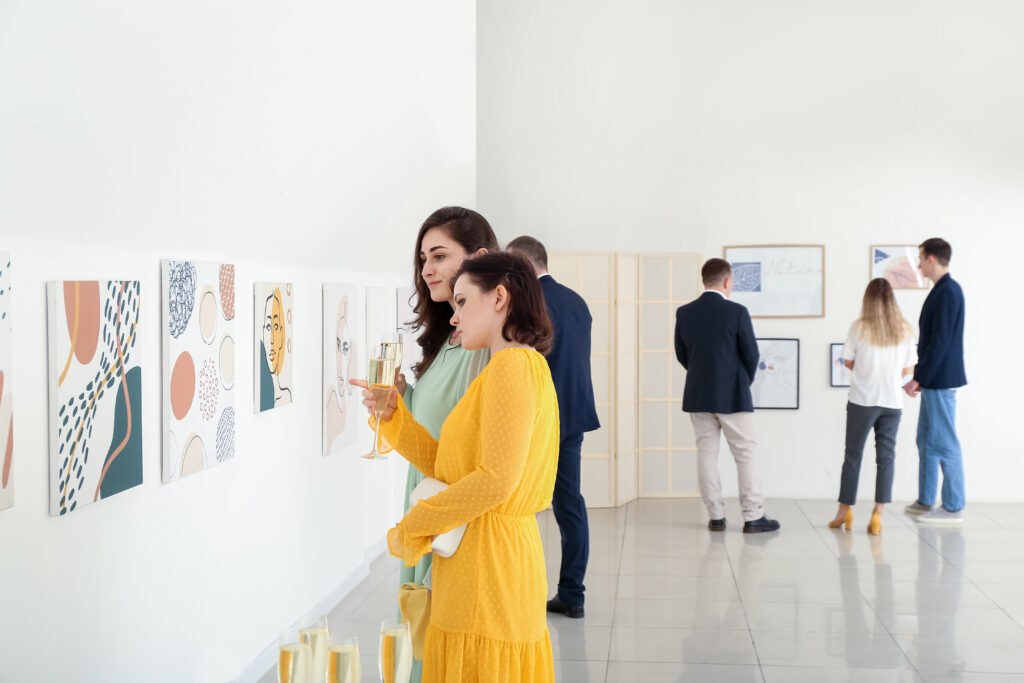
- Start with yourself – define your taste
The first step is simpler than you think: buy what you genuinely love.- Consider which styles, colors, and emotions attract you most.
- Ask yourself: why does this particular work resonate with me?
- Look for contemporary artists whose work reflects your aesthetic sensibility.
You do not need to buy pieces purely “for investment” if they do not speak to you personally. The best choices combine emotional connection with long-term potential.
- Align your strategy with your budget
A budget is not just a number – it reflects your approach to investing.- Do you have a one-time amount to invest (for example, savings or a bonus)?
- Or do you prefer investing regularly through monthly surplus income?
- Look at your finances over time – for example within a 6-12 month perspective.
Consistent investing, even with smaller amounts, allows you to build a valuable collection step by step.
- Think long term – plan your exit strategy
Every investment should have a defined time horizon.- Decide whether you plan to sell in 7, 10, or 15 years.
- Avoid the mindset of “I’ll buy it and see what happens.”
- Remember: art is a long-term investment, not speculation.
The biggest mistakes rarely come from buying – they usually result from poorly planned selling decisions.
- Choose the right market segment
Your budget and investment goals will determine where you should focus.- Emerging artists → higher growth potential
- Established artists → greater stability and security
- Prints vs. paintings vs. sculpture → different entry levels and investment dynamics
The key is choosing the best possible work within your budget.
- Consider practical aspects – storage and display
This is often overlooked, yet extremely important.- Do you have space to display artworks?
- Can you store them safely?
- Do you want to live with these works on a daily basis?
Art should be present in your living environment. This increases both its emotional and investment value.
- Think about the “marketing” of your collection
The value of a collection can be built not only through acquisitions.- Lending works to exhibitions.
- Collaborating with galleries.
- Properly documenting provenance and artwork history.
This is a more advanced stage of collecting, but it can have a real impact on the long-term growth of your portfolio’s value.
- Write down your strategy
Finally – and most importantly – document your strategy.Ask yourself:
- What do I truly like, and why?
- What is my budget today and over time?
- When do I plan to exit the investment?
- How much time can I dedicate to collecting?
- What storage and display options do I have?
A written strategy brings clarity to your decisions and protects you from impulsive purchases. A well-planned art investment strategy is a balance between emotion and rational thinking. You buy works that inspire you, while making conscious decisions with the future in mind. This is where art meets investing – and begins working for you not only aesthetically, but financially as well.